
3 MIN READ
what to look for when shame and distance have crept into the conversation.
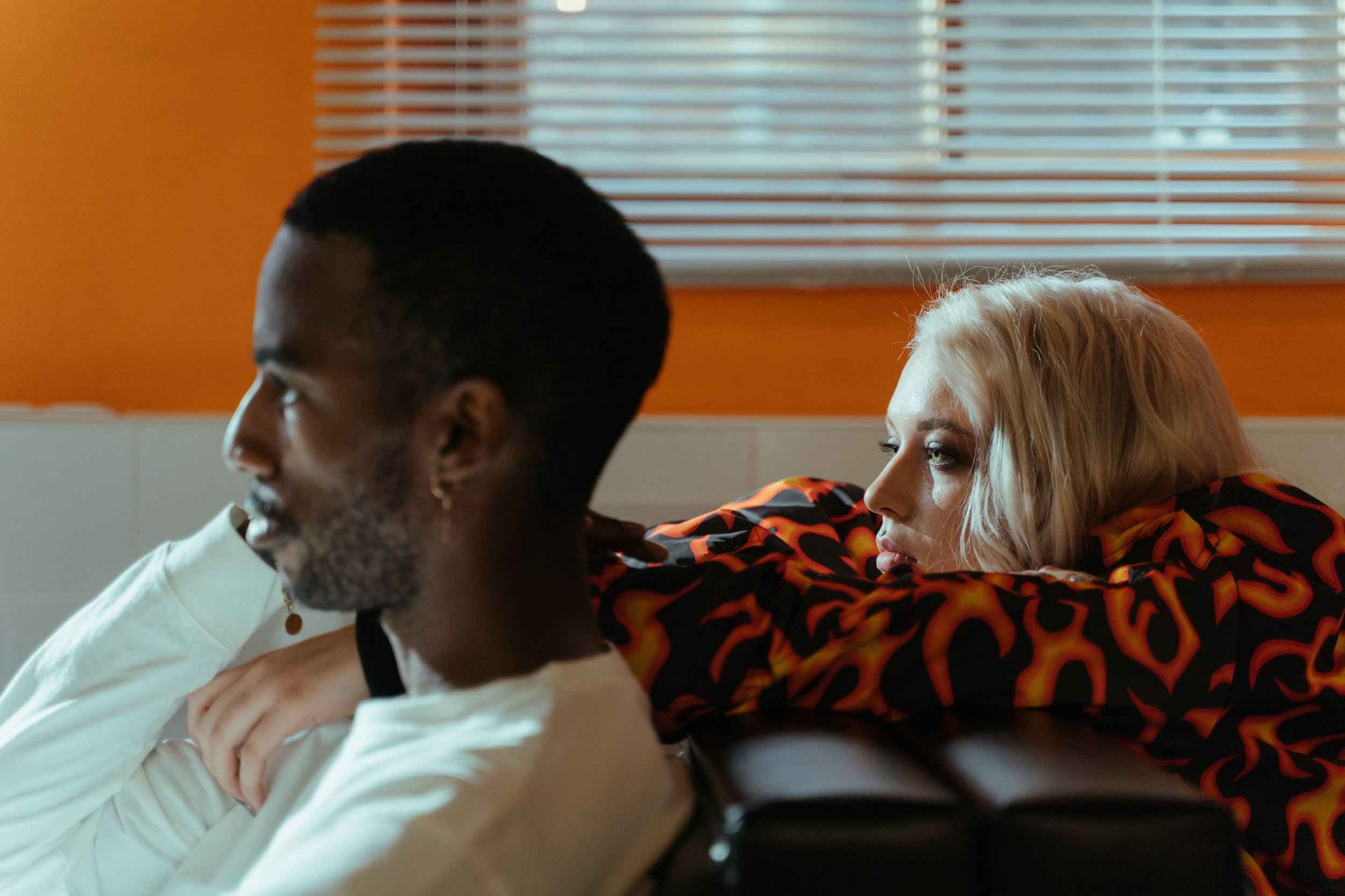
Most couples don’t start therapy because of one big moment. It’s lots of tiny moments that have built up over time. When it comes to sex, most commonly, the conversations have either stopped altogether, or they just keep ending in the same argument every time. The pattern usually looks something like, one person feeling rejected, one person feeling pressured and nobody feeling connected. If that sounds familiar, you are not alone and you don’t need someone to just act as a referee. You need someone who can help you say the things you have been circling for months, and break the cycle altogether, without it turning into blame.
Why sex is so bloody hard to talk about (even with each other)
Most of us were never actually taught how to talk about sex. We picked up scripts instead. From school, from family, from porn, from movies where nobody ever says a single word and it’s somehow perfect. Scripts about who’s meant to initiate, what “normal” desire looks like, how often couples should be having it, and what counts as “real” sex. And the big unspoken one: that if it’s “right” and “good”, you shouldn’t need to talk about it at all.
So when things get hard, most couples have zero language for it. Just a whole lot of assumptions they’ve never actually said out loud.
On top of that, sex carries more meaning than almost anything else in a relationship. It gets all tangled up with feeling wanted, feeling safe, feeling like you’re enough. So when it gets hard, shame usually shows up first. And shame makes us either shut down or get defensive. Neither of which helps you actually understand each other.
In sex positive couples therapy, we get this, and won’t rush you past it. Part of the work is noticing which scripts you’ve each been running on, and where they came from. And then slowing the conversation right down, so you can both hear what’s actually going on underneath.
What couples sex therapy actually involves
Honestly? We rarely only talk about sex. Because sex is never really just about sex. It’s the resentment over who does what at home. The mental load. The stress, the kids, the fact you haven’t had a proper conversation that wasn’t about logistics in… god knows how long. All of that ends up in the bedroom whether you want it there or not.
So what we actually do is look at the patterns. The stuff that’s built up over months, sometimes years, without either of you really noticing. Like, one of you reaches out, and the other one kind of… pulls back. Every time. Or touch started feeling loaded at some point, and you can’t even pinpoint when. Or sex has quietly come to mean something totally different for each of you, and nobody’s said it out loud.
You're both part of the conversation, and both of your experiences matter. The goal isn't to decide who's right or wrong, or to find someone to blame. It's to understand what's happening between you and work towards something that feels better for both of you.
What to look for when you are choosing someone
Finding a therapist is a bit like dating. Someone can look great on paper, have all the right qualifications, and still not be the right fit for you. And when there are two of you, finding that fit matters even more.
A few things worth asking before you book:
Do they work with couples specifically, not just individuals? Couples therapy requires its own set of skills.
Are they sex-positive and trauma-informed? You want someone who can talk openly about sex, while making space for shame, past experiences and the things that can make intimacy difficult.
How do they work with both partners? Neither of you should feel like you're walking into a room where someone is going to decide who's the problem.
Can you imagine being honest with them? Not necessarily straight away, but does the way they talk about their work make you feel like you could get there?
Because, much like dating, qualifications and experience might get someone through the door, but feeling comfortable, understood and able to be yourself is what makes the relationship work.
Where to from here?
You don't need to know exactly what's wrong or agree on what needs to change before coming to therapy. That's part of what we can work through together.
If you're wondering whether I'm the right therapist for you, you can read more about my approach and how I work with couples before deciding on your next step.
At Bare Psychology, I offer couples sex therapy via telehealth, available to couples across Australia.
Amy Campbell, Clinical Psychologist and Sex Therapist